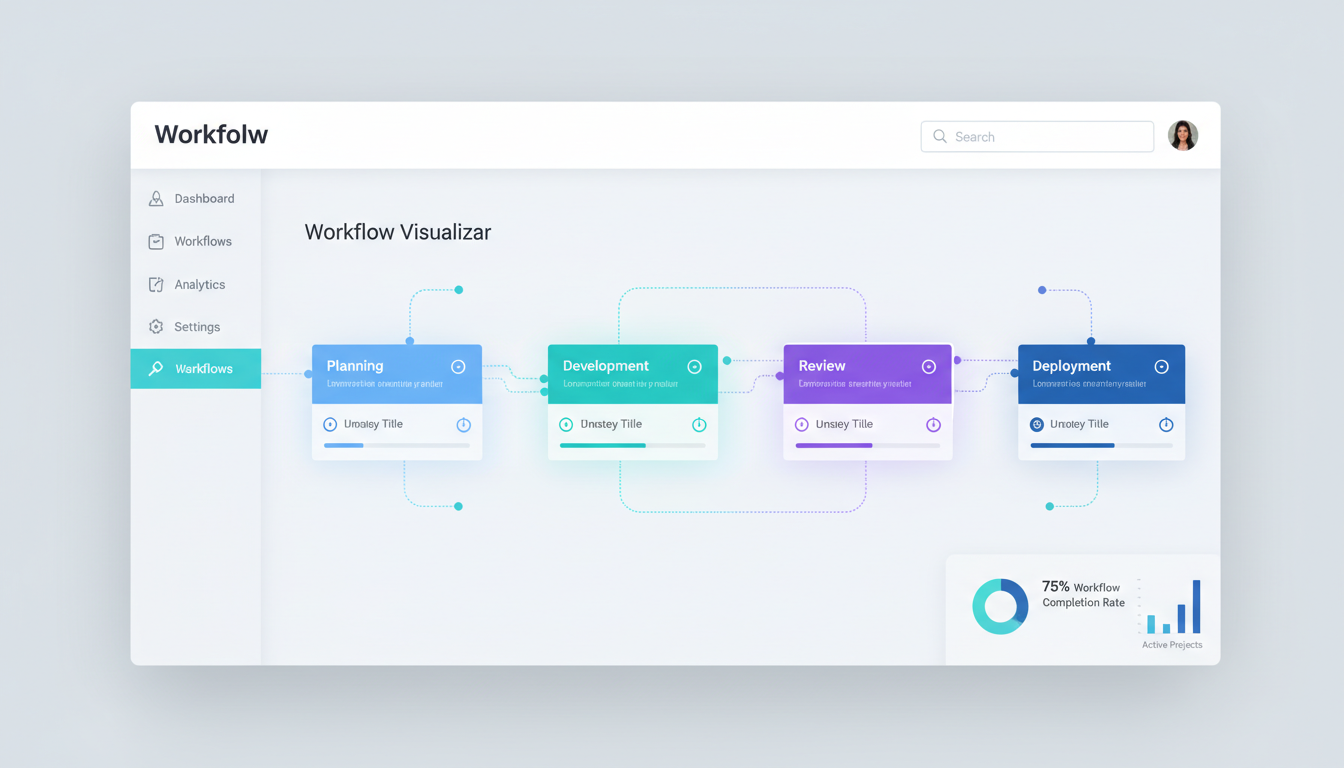
Every successful organization, regardless of its size, relies on a well-defined workfolw to achieve its objectives. Essentially, a workfolw represents the sequence of tasks, procedures, and activities that must be completed to deliver a service or product. Understanding Workflow Concepts and optimizing this operational flow is critical for enhancing productivity and ensuring consistent quality. This comprehensive guide explores the fundamentals of effective process management.
Understanding Your Existing Workfolw
Before improving any process, it is crucial to first thoroughly understand how things currently operate. Therefore, mapping out your current operational flow visually can reveal surprising insights. This involves documenting each step, identifying who is responsible for what, and noting the inputs and outputs at every stage. Furthermore, this initial mapping provides a baseline for future improvements.
Identifying Bottlenecks in Your Process
Once your current process flow is mapped, the next step involves identifying inefficiencies and bottlenecks. These are points where work slows down, gets stuck, or requires unnecessary approval. For instance, common bottlenecks include redundant steps, lack of clear communication, or excessive reliance on a single individual. Moreover, delays often occur due to outdated tools or manual handoffs. Pinpointing these areas is vital for targeted optimization efforts.
Key Principles of Effective Workflow Optimization
Optimizing an operational flow involves applying several core principles to enhance efficiency and effectiveness. Adhering to these guidelines can significantly improve outcomes. Consequently, organizations can achieve greater agility and responsiveness. Here are some fundamental principles to consider:
- Simplify: Eliminate unnecessary steps and reduce complexity wherever possible.
- Standardize: Establish clear, consistent procedures for repetitive tasks.
- Automate: Utilize technology to handle repetitive, rule-based activities.
- Integrate: Connect disparate systems and tools to ensure seamless data flow.
- Monitor & Adapt: Continuously track performance metrics and make adjustments as needed.
Benefits of an Optimized Workfolw
A well-optimized operational process delivers a multitude of advantages across an organization. Ultimately, these benefits contribute to stronger financial performance and a more competitive position. Furthermore, they foster a better working environment for employees. Consider the following key improvements:
- Increased Productivity: Tasks are completed faster and with fewer errors.
- Reduced Costs: Eliminates waste, rework, and unnecessary resource allocation.
- Improved Quality: Consistent processes lead to more reliable outcomes.
- Enhanced Customer Satisfaction: Faster service delivery and higher-quality products.
- Better Employee Morale: Reduces frustration from inefficient processes and clarifies roles.
- Greater Agility: Allows for quicker adaptation to market changes and new demands.
Implementing Workflow Automation Effectively
Automation plays a pivotal role in modern process optimization. By leveraging specialized software, businesses can automate repetitive tasks, data entry, and approval routings. Therefore, this frees up human resources for more complex, strategic work. However, successful implementation requires careful planning. First, identify processes that are highly repetitive and rule-based. Next, ensure that the automation integrates smoothly with existing systems. For instance, platforms offering Google Cloud Workflow Automation provide powerful capabilities for streamlining complex processes. Finally, provide adequate training to all users.
Tools and Technologies for Managing Your Operational Flow
The market offers a wide array of tools designed to support efficient process management. These range from simple project management software to comprehensive business process management (BPM) suites. For example, cloud-based platforms provide real-time collaboration features and centralized data access. In addition, integration platforms allow different applications to communicate seamlessly. Choosing the right tools depends on your specific needs, budget, and the complexity of your workfolw processes.
Ultimately, mastering your workfolw is not merely about making minor adjustments; it is about fostering a culture of continuous improvement. Organizations that prioritize efficient operational flows are better equipped to navigate challenges, innovate, and achieve sustainable growth. Consequently, by consistently refining how work gets done, businesses can unlock their full potential and maintain a competitive edge.
Frequently Asked Questions About Workfolw
What is a workfolw?
A workfolw is a defined sequence of tasks, steps, or activities required to complete a specific process or achieve a particular goal. It outlines the path an item of work takes from initiation to completion, indicating responsibilities and decision points. Understanding it helps improve business efficiency.
Why is workfolw optimization important?
Optimizing a workflow is crucial because it leads to increased productivity, reduced operational costs, improved service quality, and enhanced customer satisfaction. Furthermore, it empowers employees and makes an organization more adaptable to change. Therefore, it directly impacts an organization's bottom line and competitive standing.
Can small businesses benefit from workfolw management?
Absolutely. Small businesses can significantly benefit from managing their operational processes. Even simple process mapping can reveal inefficiencies and opportunities for improvement. Consequently, this leads to better resource allocation, reduced errors, and a more professional approach to operations, supporting scalable growth. Every business, regardless of size, gains from clearer operations.
Frequently Asked Questions
What makes a “perfect” AI-generated image?
It depends on your goal (photorealism, style, consistency). Use a clear brief (subject, style, lighting, framing) and iterate with variations.
How do I write a strong prompt for workfolw?
Use a simple formula: subject + context + style + lighting + composition + detail. Add constraints, then refine in small iterations.
What are negative prompts used for?
They specify what to avoid (blur, watermark, bad anatomy). They improve consistency and reduce common artifacts.
How can I improve the final quality (upscaling)?
Start with a solid composition, then upscale, fix local issues with inpainting, and apply light post-processing when needed.