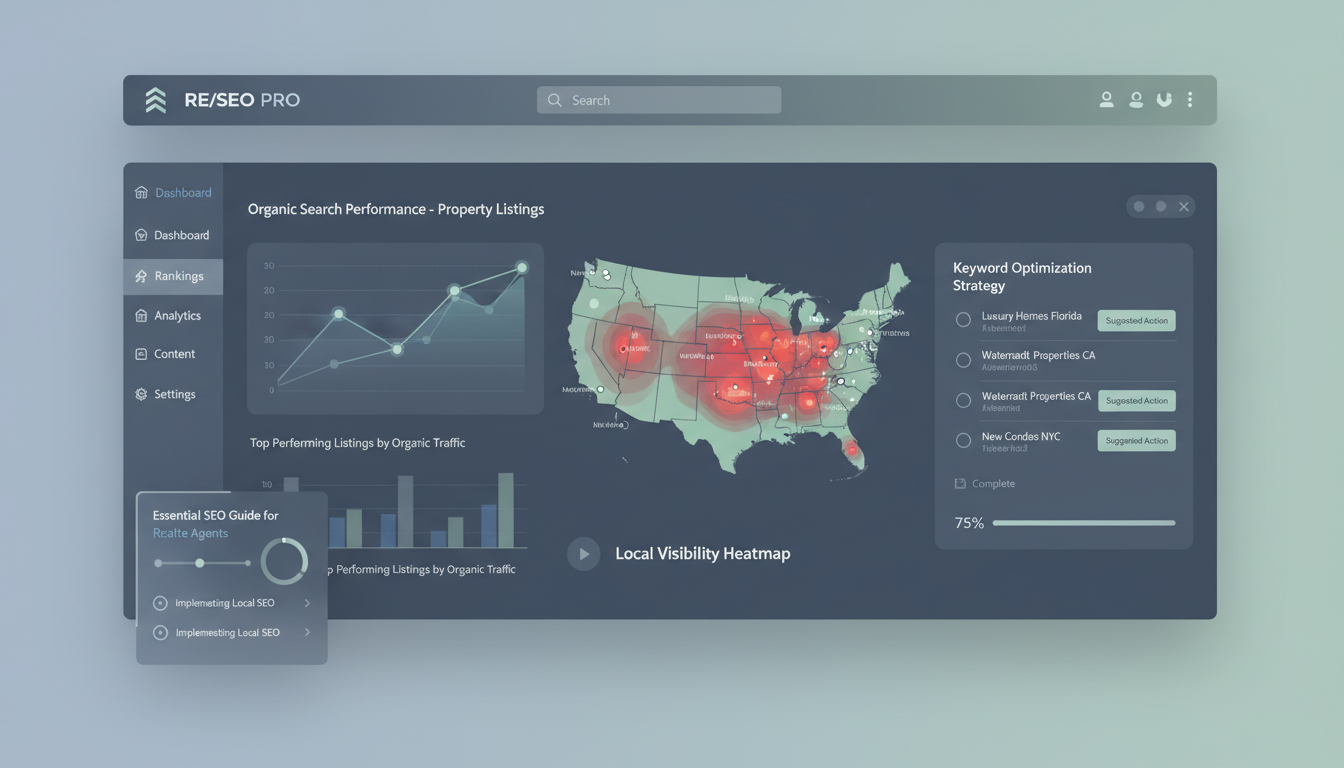
In today’s highly competitive real estate market, having a robust online presence is not merely an advantage; it’s a fundamental necessity. Prospective buyers and sellers overwhelmingly begin their property search online, making a well-optimized website the cornerstone of any successful real estate business. Consequently, mastering SEO Website Real estate practices is vital for agents and brokers aiming to stand out and capture valuable leads. This guide explores the comprehensive strategies required to elevate your digital footprint.
Establishing a Strong Digital Footprint for Real Estate
Search engine optimization (SEO) for real estate involves a suite of techniques designed to improve your website’s visibility in search engine results. Effectively, when potential clients search for properties or agents, your site appears prominently. This process is crucial for attracting organic traffic, which often converts into high-quality leads. Therefore, understanding the nuances of how search engines rank sites is the first step towards digital success.
Understanding Your Target Audience Online
A successful real estate SEO strategy begins with a deep understanding of your prospective clients. For instance, what terms do they use when searching for homes or seeking an agent? Knowing their journey, from initial interest to property viewing, informs your keyword strategy. Furthermore, targeting local phrases and long-tail keywords can significantly narrow down your audience to those most likely to convert.
Essential On-Page Strategies for Your Real Estate Site
On-page optimization involves refining elements directly on your website to improve its search engine ranking. First, high-quality content is indispensable. Consequently, craft unique property descriptions, neighborhood guides, and market insights that offer genuine value. Consider these critical components for on-page excellence:
- Strategic Keyword Integration: Naturally weave relevant keywords into titles, headings, and body text.
- Optimized Meta Data: Write compelling title tags and meta descriptions that entice clicks.
- Image Optimization: Use descriptive alt text for all images, aiding both SEO and accessibility.
- Mobile-First Design: Ensure your site is fully responsive and fast-loading on all devices.
Moreover, clear calls to action and intuitive navigation are crucial for keeping visitors engaged. A well-structured site not only guides users seamlessly but also helps search engines efficiently crawl and index your content. Ultimately, these on-page elements work in concert to enhance user experience and search visibility.
Mastering Local Search for Property Listings
For real estate professionals, local SEO is arguably the most impactful component of their online strategy. Therefore, optimizing your presence for local searches is non-negotiable. Specifically, focus on these key elements for local search success:
- Google My Business Optimization: Fully complete, verify, and regularly update your GMB profile with posts and photos.
- NAP Consistency: Maintain accurate and consistent Name, Address, and Phone number across all online directories.
- Online Reviews: Actively solicit and promptly respond to client reviews on GMB and other real estate platforms.
- Local Citations: Secure mentions of your business on local directories, community websites, and industry-specific platforms.
These collective efforts signal to search engines that your business is a relevant and trustworthy local entity. Moreover, they are particularly vital for capturing high-intent searches such as ‘homes for sale in [city]’ or ‘real estate agent [neighborhood].’ Ultimately, a robust local SEO strategy connects you directly with ready-to-act clients.
Technical SEO Considerations for SEO Website Real estate
Beyond content and local listings, the technical backbone of your site significantly impacts its search performance. Therefore, website speed is a paramount factor; slow sites deter users and can lead to higher bounce rates. Implementing a robust site structure with logical navigation ensures search engine crawlers can efficiently index all your pages.
Furthermore, an XML sitemap submitted to search engines guides them to all important pages on your site, improving crawlability. Crucially, leveraging schema markup for properties, agents, and local businesses helps search engines display rich snippets in results. This structured data makes your listings more appealing and informative directly on the search results page, enhancing click-through rates for your real estate website.
Building Authority Through Off-Page Techniques
Off-page SEO involves activities performed outside your website to boost its ranking. Primarily, building high-quality backlinks from authoritative and relevant websites signals trust and credibility to search engines. Consider partnerships with local businesses, community organizations, or industry publications to secure valuable links.
Additionally, promoting your content across social media platforms expands your reach and can indirectly contribute to SEO by driving traffic and brand mentions. Public relations efforts, such as press releases about recent sales or market insights, can also generate media coverage and powerful backlinks. Ultimately, these external signals reinforce your website’s authority.
The Role of Content Marketing in Driving Traffic
Engaging and informative content is the engine that drives organic traffic to your real estate website. Regularly publishing blog posts on topics like ‘first-time home buyer tips,’ ‘local market trends,’ or ‘home staging advice’ positions you as an industry expert. Consequently, this diverse content attracts different segments of your target audience.
Moreover, incorporating multimedia elements like high-quality photos, virtual tours, and engaging video walk-throughs enhances user experience and increases time on site. Sharing local community information, school district details, and lifestyle guides also adds significant value. This content strategy continuously feeds your SEO efforts, drawing in potential clients who are seeking valuable information.
Measuring Success and Adapting Your Strategy
Effective SEO for real estate is an ongoing process that requires diligent monitoring and adaptation. Utilizing tools like Google Analytics and Google Search Console allows you to track key performance indicators (KPIs) such as website traffic, keyword rankings, bounce rate, and lead conversions. Regularly reviewing these metrics provides crucial insights.
Based on your data, you can refine your keyword strategy, optimize existing content, or identify new content opportunities. For example, if certain neighborhood guides are performing well, consider expanding on similar topics. Continuous optimization ensures your SEO Website Real estate strategy remains effective and responsive to evolving market conditions and search engine algorithms.
Frequently Asked Questions About Real Estate Website SEO
Q1: Why is SEO important for real estate agents? A1: SEO is crucial for real estate agents because it increases online visibility, driving organic traffic of potential buyers and sellers directly to their website. This significantly boosts lead generation and helps establish the agent as a local authority in the property market.
Q2: How long does it take to see SEO results? A2: SEO is a long-term strategy; therefore, significant results typically take several months, usually 4-6 months, to become apparent. However, initial improvements can sometimes be observed sooner, depending on competition and strategy implementation.
Q3: What are the most crucial elements of local SEO for real estate? A3: The most crucial elements include optimizing your Google My Business profile, ensuring NAP (Name, Address, Phone) consistency across directories, actively managing online reviews, and securing local citations from relevant websites.
Q4: Should I focus on content creation or link building more? A4: Both content creation and link building are vital for a comprehensive SEO strategy. While compelling content attracts users and provides value, strong backlinks validate your content’s authority. A balanced approach that prioritizes both is generally most effective.
In conclusion, a well-executed SEO Website Real estate strategy is indispensable for real estate professionals striving for sustained online success. By diligently focusing on on-page optimization, local SEO, technical soundness, off-page authority, and strategic content marketing, you can significantly enhance your digital presence. Investing in these practices ensures your business remains competitive, attracts qualified leads, and ultimately drives growth in a dynamic digital landscape.
Read also
- Application Mobile for Rent Car: Your Ultimate Guide to Seamless Vehicle Rentals
- Smart Agent AI: Revolutionizing Automation and Intelligence
- Business AI Agency: Driving Innovation and Growth for Enterprises