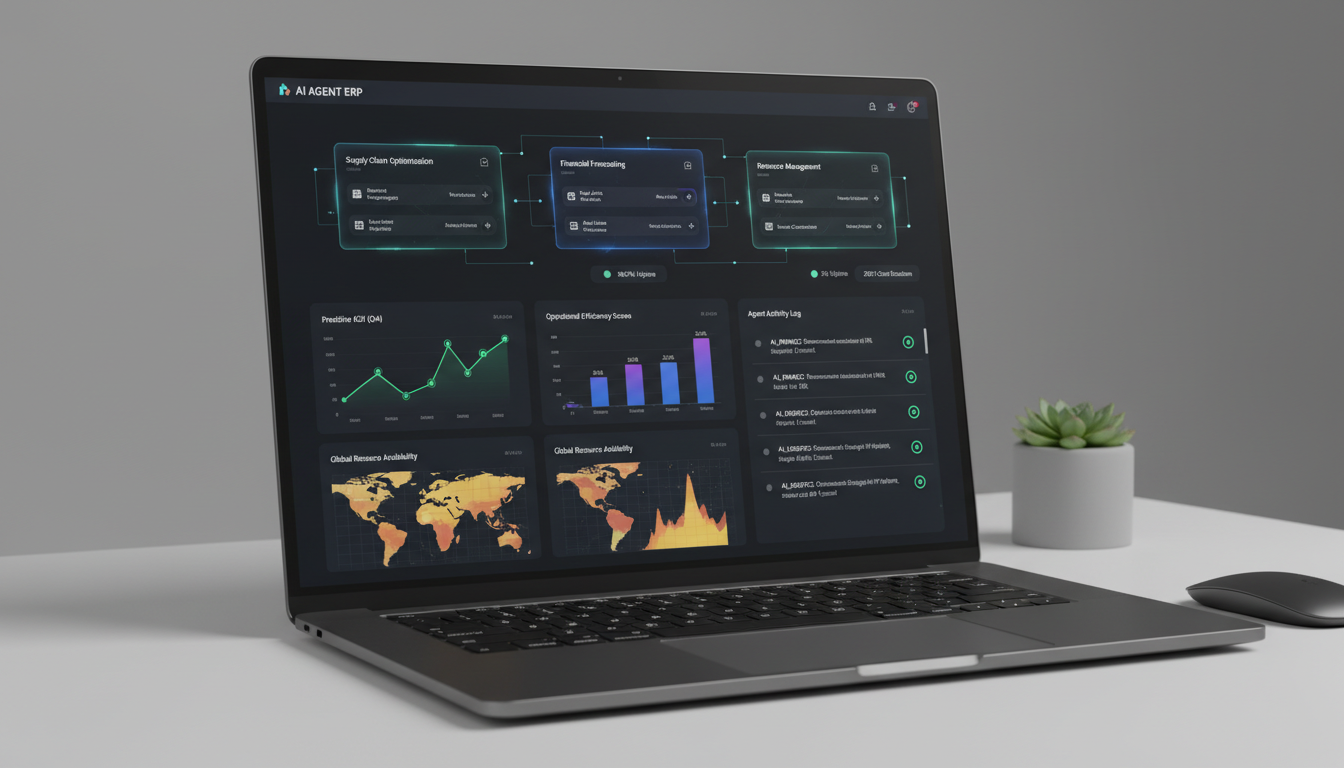
AI AGENT ERP: Revolutionizing Business Operations with Intelligent Automation
Businesses today are constantly seeking ways to optimize operations and enhance decision-making. The emergence of AI AGENT ERP represents a significant leap forward in this quest. This innovative approach integrates advanced artificial intelligence agents directly into Enterprise Resource Planning systems, fundamentally transforming how organizations manage their resources. Consequently, companies can achieve unparalleled levels of automation, insight, and efficiency across all departments.
What is an AI Agent ERP System?
An AI Agent ERP system merges the robust functionalities of traditional ERP with the dynamic capabilities of artificial intelligence agents. Essentially, these intelligent agents automate complex tasks, analyze vast datasets, and proactively suggest optimal actions. Therefore, the system moves beyond mere data storage to become a true strategic partner, guiding business processes.
Moreover, AI-powered ERP solutions leverage machine learning to continuously learn from operational data and improve their performance over time. This adaptability allows the system to evolve with business needs and market changes. Ultimately, it ensures that your enterprise resource planning remains cutting-edge and highly effective.
Key Benefits of AI-Powered Enterprise Resource Planning
The integration of AI agents within ERP systems unlocks a multitude of benefits for modern enterprises. These advantages span across various business functions, fostering greater agility and competitive strength. Importantly, these intelligent systems help businesses respond faster to opportunities and challenges.
Enhanced Operational Efficiency
AI agents automate a wide array of routine and repetitive tasks, from data entry to invoice processing. As a result, human employees are freed to focus on more strategic initiatives. This automation drastically reduces manual errors, simultaneously accelerating operational workflows and increasing overall productivity. Hence, businesses operate with greater precision and speed.
Intelligent Decision-Making
One of the most profound benefits is the system's ability to provide deep, predictive insights. Using advanced analytics, an AI AGENT ERP system can forecast trends, identify potential risks, and recommend optimal courses of action. Consequently, leaders can make informed, data-driven decisions that are precisely aligned with business objectives. Furthermore, real-time data analysis ensures decisions are always based on the most current information.
Proactive Problem Solving
Intelligent ERP systems can monitor operations for anomalies and potential issues, often detecting problems before they escalate. For example, an AI agent might flag a potential supply chain disruption based on weather forecasts or geopolitical events. This proactive stance minimizes downtime, prevents costly errors, and bolsters business resilience. Therefore, organizations can maintain smoother, more reliable operations.
Scalability and Adaptability
Modern intelligent ERP solutions are designed to scale seamlessly with business growth and evolving requirements. Their modular architecture and AI-driven adaptability allow for easy integration of new functionalities or expansion into new markets. Thus, an AI-driven enterprise resource planning system provides a future-proof foundation for continuous innovation and expansion.
Core Components and Functionalities of AI AGENT ERP
Understanding the foundational elements of an advanced AI ERP system is crucial for appreciating its capabilities. These components work in concert to deliver a comprehensive and intelligent resource management platform. Together, they create a powerful ecosystem for business optimization.
Here are some essential components:
- Intelligent Automation Modules: Automate routine and complex business processes across departments.
- Predictive Analytics Engines: Utilize machine learning to forecast future trends and outcomes.
- Natural Language Processing (NLP): Enables intuitive user interaction and analysis of unstructured data.
- Machine Learning (ML) Algorithms: Continuously learn and adapt to improve system performance and accuracy.
- Real-time Data Integration: Connects various data sources for a unified, comprehensive view of operations.
The operational flow of these systems often involves a clear sequence:
- Data Collection & Processing: Gathering vast amounts of data from all business touchpoints.
- Insight Generation: Applying AI and ML to transform raw data into actionable insights and predictions.
- Automated Action & Execution: Initiating automated tasks or providing clear recommendations for human intervention.
Implementing Advanced AI ERP: Best Practices
Successful implementation of any advanced AI ERP solution requires careful planning and execution. First, organizations should clearly define their business goals and identify areas where AI can deliver the most impact. Furthermore, a phased approach often proves most effective, allowing for incremental adoption and refinement.
Secondly, data quality is paramount for effective AI agent performance. Therefore, investing in data governance and cleansing processes before and during implementation is critical. Finally, comprehensive training for end-users and continuous support are essential for maximizing user adoption and realizing the full potential of the new system. Consequently, businesses can ensure a smooth transition and lasting success.
The Future Landscape of Intelligent ERP
The evolution of intelligent ERP is set to continue at a rapid pace. We can anticipate more autonomous AI agents capable of making complex decisions with minimal human oversight. Moreover, the integration of advanced technologies like IoT and blockchain will further enhance the data richness and security within these systems. Ultimately, these advancements will drive even greater efficiency and innovation.
Furthermore, the focus will shift towards hyper-personalization, tailoring ERP functionalities to individual user roles and specific business nuances. As AI capabilities mature, the future of enterprise resource planning promises systems that are not just smart, but truly intuitive and self-optimizing. This will allow businesses to remain agile and competitive in an ever-changing global market.
Frequently Asked Questions about AI ERP Solutions
What differentiates an AI AGENT ERP from traditional ERP?
An AI AGENT ERP integrates artificial intelligence agents for automation, predictive analytics, and proactive problem-solving, moving beyond traditional ERP's focus on data management and process standardization. It offers intelligent insights and autonomous actions, rather than just recording and organizing data.
Can AI agents integrate with existing ERP systems?
Yes, many AI agent solutions are designed for seamless integration with existing ERP frameworks. This allows businesses to augment their current systems with AI capabilities without a complete overhaul, ensuring a smoother transition and leveraging existing investments.
What industries benefit most from AI-driven ERP?
Virtually all industries can benefit, but sectors like manufacturing, supply chain management, retail, and finance experience significant gains due to complex operations, large data volumes, and the need for precision and forecasting. Healthcare and professional services also find value in enhanced efficiency and resource allocation.
How does AI enhance data security in ERP?
AI enhances data security by identifying anomalous activities and potential threats in real-time, often before human detection. It can learn normal user behaviors and flag deviations, provide predictive insights into vulnerabilities, and automate security responses, thereby bolstering the overall defense mechanisms of the ERP system.
Read also
- AI Agency: Your Strategic Partner for Artificial Intelligence Solutions
- Intelligence Artificielle Ouverte : OpenAI et l’Avenir du Design et de la Créativité
- AI Agent ERP Integration with WhatsApp: Streamlining Business Communication